Image: REUTERS/Heather Khalifa
The World Economic Forum’s Global Risks Report 2026, published Jan. 14, 2026, warns that the greatest near-term threat to global stability is not a natural disaster or a pandemic — it is geoeconomic confrontation. In a survey of more than 1,300 experts, analysts and leaders, the report finds economic tools (tariffs, sanctions, investment restrictions and supply-chain controls) are being used increasingly as instruments of statecraft — and that shift has pushed geoeconomic competition to the top of the short-term risk list. The report also records rising anxiety about the societal and security implications of artificial intelligence and a shorter-term drop in the relative ranking of some environmental hazards, although those environmental risks remain the most severe over a ten-year horizon.
What happened (summary)
The Global Risks Report 2026 assesses risks across three horizons — immediate (2026), short-to-medium (next two years) and long term (to 2036). Its headline finding: geoeconomic confrontation is now viewed as the risk most likely to trigger a global crisis in 2026, followed by interstate conflict, extreme weather, social polarization, and misinformation/disinformation. Economic risks such as downturn and inflation also climbed sharply in the two-year outlook, reflecting a more volatile macroeconomic backdrop. Meanwhile, concern about adverse AI outcomes surged in longer-term assessments.
Background context
Over the last half-decade global relations have shifted from multilateral cooperation toward competitive, transactional interactions among major powers. Governments have deployed export controls, investment screening, and tariffs with increasing frequency; supply-chain realignment and resource security (for semiconductors, EV battery minerals, etc.) have become national priorities. These geoeconomic moves can stabilize strategic supply chains for some countries while fragmenting global trade and investment networks — increasing the chance that economic policy itself becomes a source of crisis rather than a buffer against one. At the same time, rapid technological change — especially AI deployment across commerce, media and defense — amplifies social risks such as misinformation and labor disruption.
Why this matters to Americans
For U.S. audiences, the findings are more than abstract: U.S. policy decisions shape — and are shaped by — the geoeconomic dynamics the report flags. Higher tariffs, more aggressive export controls, and selective investment bans can protect domestic industries but also invite retaliatory measures that raise costs for American businesses and consumers. Geoeconomic friction can hit U.S. supply chains for electronics, energy and critical minerals, raising prices and disrupting production. Domestic political polarization and the U.S. role in global alliance structures also change how the country can respond in coordination with allies — or act unilaterally — when crises arise.
Financial, legal and lifestyle impacts
- Markets & investments: Increased geoeconomic risk tends to raise market volatility and can depress cross-border investment. Firms exposed to trade with rival economies may see profit pressure and asset-valuations shift as risk premia rise.
- Consumer prices & supply chains: Tariffs, export restrictions or supply-chain re-shoring can raise costs for electronics, automobiles and household goods — potentially contributing to inflationary pressure that affects everyday budgets.
- Legal & compliance burden: Companies operating globally will face tighter scrutiny: export controls, sanctions compliance, and national security reviews will expand legal workloads and could slow transactions or M&A activity. Lawyers and compliance teams will be in greater demand.
- Work & lifestyle: Broader adoption of AI carries both productivity gains and job-market disruption. Workers in routine or easily automated roles may need retraining; at the same time, AI-driven innovation could spur new industries and consumer services.
Expert opinions (generic)
Policy analysts and risk experts broadly interpret the report as a call to balance competitiveness with cooperation. Many argue that neglecting interconnected global systems — trade, finance, climate, technology standards — raises the odds of cascading shocks. Other analysts emphasize the need for targeted resilience: rebuilding secure supply chains for critical goods, strengthening domestic fiscal buffers, and investing in workforce retraining to smooth AI transitions. Experts also note that risk rankings are not fate; prudent policy choices can reduce fragility.
What happens next
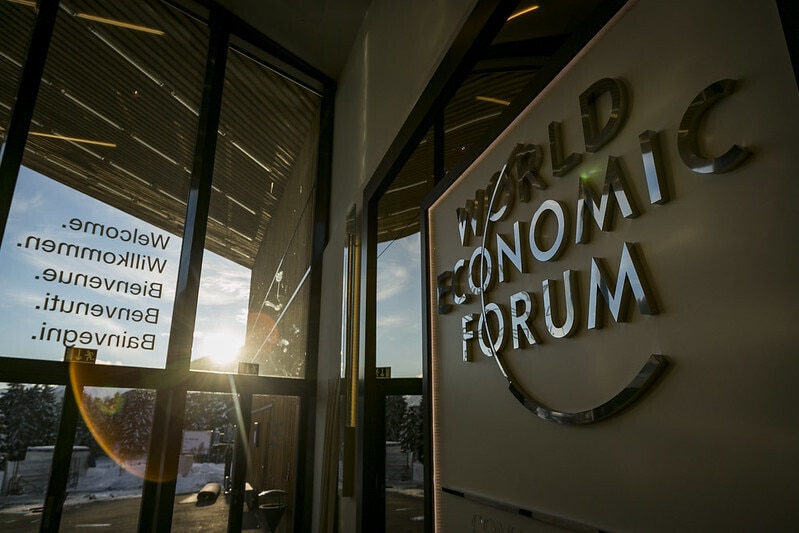
Expect the Global Risks Report to shape conversations in Davos and in capital cities this winter. Policymakers will likely debate trade policy and investment-screen rules, seek new mechanisms for economic dialog with rivals, and accelerate domestic measures to contain AI risk. Corporations should reassess geopolitical exposure, stress-test supply chains, and accelerate compliance and scenario planning. For citizens, the practical next steps are familiar: watch for policy changes that affect prices and jobs, and consider skills upgrading in areas complementary to AI — technical maintenance, supervision, and roles emphasizing human judgment.
FAQs
1. What is “geoeconomic confrontation”?
It refers to the use of economic policy tools — tariffs, sanctions, investment restrictions, trade barriers — as instruments of strategic competition between states. It can disrupt trade, investment and global supply chains.
2. Does the report say climate change is no longer a top worry?
No. While environmental risks slipped in the short-term ranking, they remain the most severe risks over a 10-year horizon, with extreme weather and biodiversity loss among the top long-term threats.
3. How likely is a full economic decoupling between major powers?
The report signals a trend toward fragmentation and competitive blocs but stops short of predicting full decoupling. Outcomes will depend on policy choices and diplomatic efforts in the coming years.
4. Should I change my investments because of this report?
The report is a risk signal, not investment advice. Many investors respond to elevated geopolitical and economic risk by diversifying, increasing liquidity, and stress-testing portfolios for supply-shock scenarios. Consult a financial advisor for personalized guidance.
5. Will AI make these risks worse?
AI is highlighted as a growing long-term concern because of its potential to reshape labour markets, social cohesion, and security. Poorly governed AI deployment could amplify misinformation, bias, and automated conflict capabilities, but well-managed AI also offers tools for risk mitigation.
Source: World Economic Forum, Global Risks Report 2026. Read the full report for details and data visualizations.